
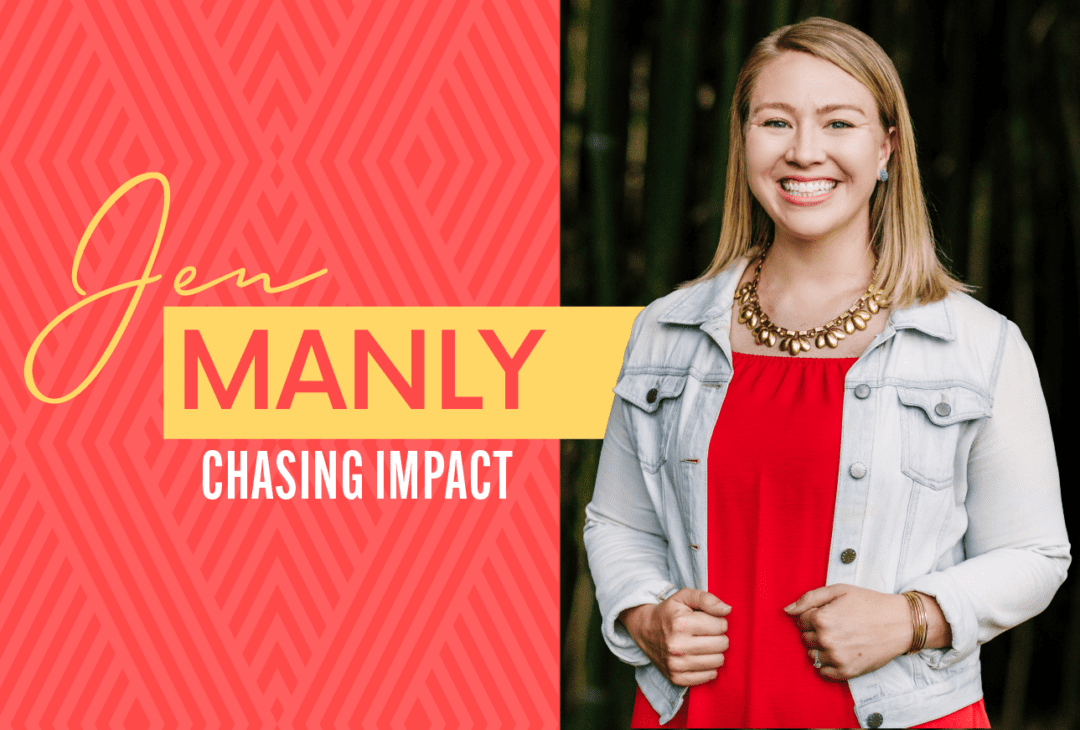
Jen Manly
Jen Manly helps K-12 districts and schools design purposeful, sustainable approaches to two of the biggest challenges facing education today: teacher burnout and the integration of AI. Her work supports institutions and individual educators in clarifying what they value and building systems that reflect it.
Consulting Overview
Available Programs
Sustainable Systems for Educators
- Chasing Impact, Not Hours: How School Leaders can Retain Teachers through Doing Less, Better
- A Boundaries Blueprint for School Leaders
- Doing Less, Better: Sustainable Practices for Classroom Teachers
- The Boundaries Blueprint for Classroom Teachers
Conscious AI Integration
- Building Your School’s Conscious AI Code: A Framework for Ethical Integration
- Conscious AI in the Classroom
- Conscious AI for Students
Student Led Learning and Agile Education
Getting to know
Jen Manly
Jen Manly believes school leaders and educators deserve to do big, meaningful work without sacrificing themselves in the process. She discovered her passion for intentional work as a classroom teacher, where she found herself on the brink of burnout less than three years into a profession she loved. Through productivity science and clearly articulated boundaries, she learned to prioritize the most impactful work, better serve students, and protect what mattered outside the classroom. That experience became the foundation of her work today: helping schools and districts build systems that put the humans inside them first.
Jen spent nearly a decade teaching computer science at the middle, high school, and college levels, and currently teaches at the University of Maryland, College Park. She has taught ethical AI for seven years, guiding K-12 and college students as well as educators through the questions that come with integrating AI into learning. A pioneer in student-led learning, she is a co-author of the Agile Educator Guide and has served on curriculum writing teams at the local, state, and national levels.
Jen is a two-time national teaching excellence awardee and the founder of Strategic Classroom, where her work supports more than 250,000 educators globally. Her work has been featured in Edutopia, ISTE, and Glamour Magazine. She holds a bachelor’s degree from the University of Georgia and a Master of Arts in STEM Education from the University of Maryland, Baltimore County.
SAMPLE PACKAGES
Jen’s consulting work is designed to be flexible. Rather than fixed programs, engagements are built from a set of core deliverables that can be combined and scaled to fit a school or district’s priorities, timeline, and capacity, and can be facilitated either in person or virtually.
Refer to the consulting options for a list of deliverables. The document below helps to explain how these options could work together.
PROMOTIONAL MATERIALS
To help you promote your event with Jen, CAMPUSPEAK has created promotional templates you can use. In this folder, you will find resources for social media, a promotional poster for printing, and press photos you can use for your event.
Link to Promotional Materials.
LOGISTICAL MATERIALS
Below you will find logistical resources for the day of your event with Jen.
In-Person Event AV Needs (PDF)
Speaking Introduction (PDF)

How Jen Approaches Her Work
In practice, the biggest challenges facing education today aren’t isolated problems. Initiatives like addressing teacher burnout, AI integration, and increasing student engagement are often treated as separate, when in reality they share a common root. Each one comes down to whether the structures that exist within schools are built to serve the people inside them or whether they ask people to absorb the cost of structures that weren’t designed through a human-first lens.
Jen’s work begins from this premise. Whether a district is working to improve teacher retention, build an AI policy, or rethink how today’s students learn, the process is the same: clarify what you actually value, assess where current systems aren’t built to serve people, and build new ones that prioritize what actually matters.
Districts engage Jen for specific areas of focus, outlined below. The throughline of every engagement is a commitment to building schools where students are seen and adults are deeply supported through systems designed for humans, first.
consulting and engagement options
Jen’s consulting work is designed to be flexible. Rather than fixed programs, engagements are built from a set of core deliverables that can be combined and scaled to fit a school or district’s priorities, timeline, and capacity, and can be facilitated either in person or virtually.
Every deliverable can be focused on any of the areas outlined above, which means a district can build an engagement around teacher sustainability, AI integration, student led learning, or a combination, without changing the underlying structure of the work.
Deliverables
- Keynote
- Half Day Workshop
- Full Day Workshop or Workshop Series
- Leadership Session
- Needs Assessment
- Customized Digital Resource Hub
- Leadership Office Hours
- Virtual PLC & Community Access
- On Demand Course Access
- Year Long Partnership
- Implementation Coaching & Check Ins
Visit the Downloadable Resources section for sample packages that illustrate how these pieces commonly come together.
For School Leaders: Sustainable Systems for Educators
Chasing Impact, Not Hours: How School Leaders can Retain Teachers through Doing Less, Better
Teacher turnover is one of the most expensive problems in education, and most retention strategies miss a core cause: teachers don’t leave because they stop caring, they leave because the role has become unsustainable. Wellness initiatives, resilience PD, and appreciation weeks treat the symptoms while adding more to teacher plates. This session reframes teacher burnout as a leadership leverage point and equips school leaders with the structural moves that reduce staff workload without sacrificing instructional quality. Built on more than fifteen years of passion centered work and a decade in the classroom, the session covers impact focused prioritization, real boundaries that protect teacher time, meeting and communication audits that reclaim teacher hours, and decision filters leaders can use to stop adding to staff workload by default.
As a result of attending, school leaders will learn:
- How to conduct a teacher sustainability audit in their building
- Three structural changes they can implement in the first month
- Language and framing for communicating workload changes to staff in a way that builds trust
- A decision filter for new initiatives, mandates, and asks
- How to position teacher sustainability as a leadership leverage point, not a wellness problem
For School Leaders: Sustainable Systems for Educators
A Boundaries Blueprint for School Leaders
Boundaries in schools are often discussed as something individual teachers should set for themselves, with little attention paid to whether leadership is modeling, protecting, or actively undermining them. This session helps school leaders examine the leadership practices and communication norms that either enable or erode healthy boundaries in their buildings. Leaders will leave with a clear sense of their building’s boundaries challenges, the leadership moves that model sustainable practice from the top, and strategies for holding boundaries even when staff, families, or central office push back.
As a result of attending, school leaders will learn:
- How leadership behavior shapes building wide boundary norms
- Where common boundary erosion happens in schools and how to address it structurally
- How to communicate boundary related decisions to staff, families, and central office
- Strategies for holding leadership boundaries under pressure
For Classroom Educators: Sustainable Systems for Educators
Doing Less, Better: Sustainable Practices for Classroom Teachers
Most teachers know they are overwhelmed, but have been given few real tools to do anything about it. This workshop equips teachers with the productivity science, prioritization frameworks, and personal practices that help them protect their time and energy inside the systems they currently work in. Built from the same approach that has reached more than 250,000 educators globally, the session focuses on what teachers can change in their own practice this week, not on what they cannot control, and gives actionable ways to be both efficient and effective as an educator.
As a result of attending, teachers will learn:
- How to prioritize their work based on impact, not urgency, centering student learning in the decision making process
- Specific, science backed productivity strategies for the classroom
- How to identify and plan for their recurring tasks
- A weekly planning approach that ensures they’re always able to do their most impactful work
- How to make sustainable choices even when the system around them is not yet sustainable
For Classroom Educators: Sustainable Systems for Educators
The Boundaries Blueprint for Classroom Teachers
Teachers are asked to be available to students, families, colleagues, and administrators in ways that few other professions require. Without clear boundaries, that availability quietly consumes the time and energy needed to do the actual work of teaching well. This workshop helps teachers define the relationship they want with their work in four key areas: time, communication, tasks, and emotions. Teachers will leave with articulated boundaries, language for communicating them, and strategies for holding them when those boundaries are tested.
As a result of attending, teachers will learn:
- How overwork depletes energy and limits classroom impact
- How to define the relationship they want with work in four areas: time, communication, tasks, and emotions
- How to communicate boundaries with students, families, colleagues, and administrators
- Strategies for holding boundaries when they are met with resistance
- How to let go of guilt associated with prioritizing their own well being
For School Leaders : Conscious AI Integration
Building Your School’s Conscious AI Code: A Framework for Ethical Integration
Staff are using AI to grade and students are using it to write essays. Every week, it seems like a new AI tool hits the market, promising to improve learning. The question is whether a school has stopped to define how it actually wants to use AI. Just as a school would not adopt a new curriculum without clear instructional priorities, integrating AI requires intentional choices about when, how, and why staff and students engage with these tools. This session walks school leaders through building a Conscious AI Code: a building level framework for AI decisions grounded in the school’s values and instructional priorities. Drawing on seven years of teaching ethical AI in classroom and organizational settings, participants will leave with a draft Code, a decision-making framework for the questions still ahead, and a plan to communicate it with building and community stakeholders.
As a result of attending, school leaders will learn:
- How to identify the values that should anchor a building or district’s AI decisions
- A decision making framework for AI questions that have not yet been asked
- How to develop positions on staff AI use, student AI use, and vendor evaluation
- How to roll out an AI Code in a way that builds buy in rather than resistance
- How to navigate the gray areas of AI use in academic integrity and instructional practice
For Classroom Educators : Conscious AI Integration
Conscious AI in the Classroom
Teachers are being asked to make decisions about AI every day, often without clear guidance and almost always without time to think through what they actually believe about its use. This workshop helps teachers build their own framework for conscious AI use in their classrooms: how to evaluate the tools available to them, how to make decisions about student use, and how to teach students to engage with AI thoughtfully. The session draws on seven years of AI ethics facilitation and is grounded in real classroom scenarios teachers are facing right now.
As a result of attending, teachers will learn:
- A decision making framework for evaluating AI tools and their classroom use
- How to distinguish between AI use that supports learning and AI use that replaces it
- How to co-create classroom expectations for student AI use that align with their instructional values and support student buy in
- Strategies for managing instructional workload without relying solely on AI shortcuts
- How to teach students to engage with AI consciously and ethically
For Students : Conscious AI Integration
Conscious AI for Students
Students are using AI every day, often without ever stopping to think about how they want to use it. Navigating AI requires intentional choices about when, how, and why they engage with these tools. This keynote helps students develop their own Personal AI Code: a framework for making intentional decisions about AI use that align with their values, academic goals, and definition of integrity. Drawing on seven years of experience facilitating ethical AI conversations with students, the session walks students through real ethical dilemmas and equips them with strategies for managing academic overwhelm without compromising their learning.
As a result of attending, students will learn
- How to identify and evaluate ethical considerations in common AI scenarios
- A decision making framework for conscious AI choices in academic and personal contexts
- How to distinguish between AI use that enhances learning and AI use that replaces it
- Strategies for managing academic stress without relying solely on AI
- How to create and implement their own Personal AI Code
For Classroom Educators : Student Led Learning
The Student Led Classroom Toolkit
All students deserve learning experiences focused on solving real-world, authentic problems, allowing them to practice collaboration, communication, and creativity. In a world where more tasks and jobs are becoming automated, empowering our students to be collaborative problem solvers, creative innovators, and reflective, lifelong learners make them indispensable. In this interactive program, Jen Manly will lead participants through learning tangible tools and strategies to help transform their classrooms into places where students do work that matters to THEM right now. Through classroom management methods that empower student coaching and collaboration, assessment tools that amplify and inspire creativity, tips for building student tenacity, and strategies to manage 100+ unique projects all at once without losing your mind, teachers will leave this session ready to transform their classroom from student-centered to student-led.
As a result of attending, teachers will learn:
- The difference between classroom management and classroom leadership
- How to lead students through authentic learning experiences
- Strategies for creating systems and space for student leadership
- How to authentically assess work in a student led classroom
- Tools to implement these strategies in their own classrooms immediately
For Classroom Educators : Student Led Learning
Group Work That Works
Isn’t it time that classroom group work evolves to meet the demands of the 21st century workplace? Through true project-based learning, students break down large-scale group projects, learn to prioritize the most important tasks, andhold check-in meetings and retrospectives. Agile brings learning to life and gives them skills that mirror those used in the real world. What’s more, students effectively collaborate, communicate, and create, giving meaning to lessons and increasing student agency. Participants will leave understanding how agile education empowers students to utilize structures to better assess, self-monitor, plan, and reflect on their own learning. Experience how agile solves common classroom challenges, evokes engagement, fosters human connection, and empowers student growth.
As a result of attending, teachers will learn:
- How agile project management supports student choice and collaboration
- How agile helps students plan, self-monitor, and reflect on their own learning
- Considerations for assessment and classroom management with an agile approach
- Implementable tools and resources for immediate classroom use
- How to facilitate effective student group work without micromanaging it
JEN’S BLOGS
The following are past entries Jen has written for the CAMPUSPEAK Speaker’s Voice Blog