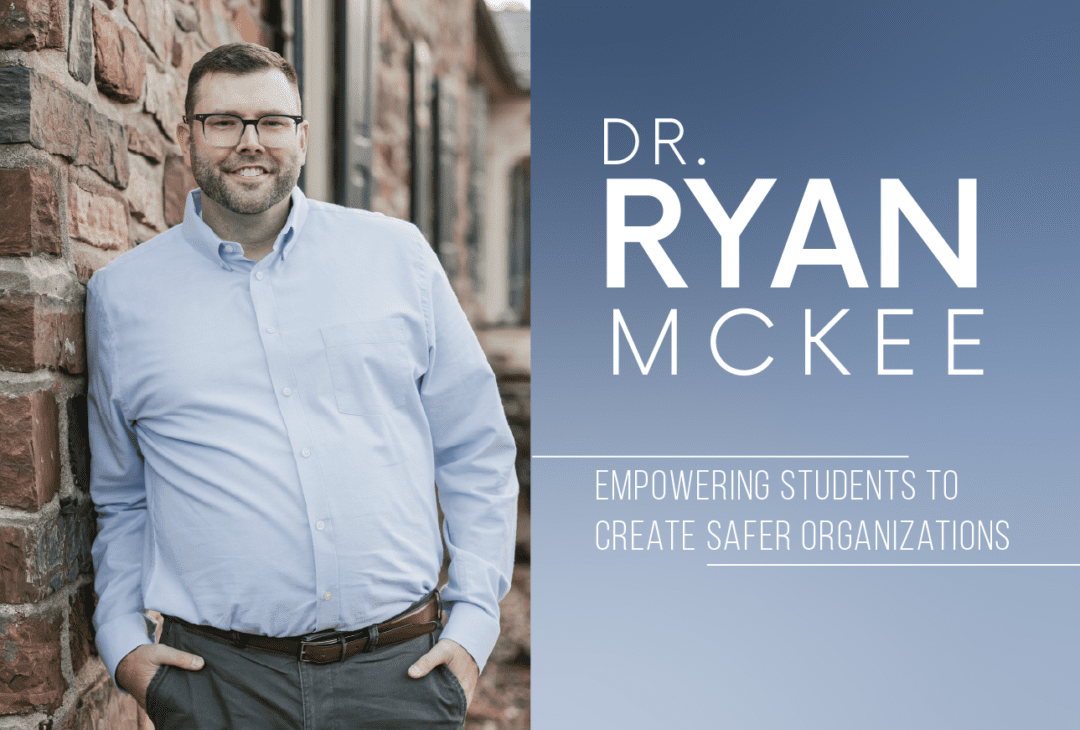
Dr. Ryan McKee
Combining original research and stories from over two decades of working with college students, Dr. Ryan McKee helps facilitate conversations on challenging topics like hazing, sexual violence, and sexual health.
TOPICS
- Hazing Prevention
- Sexual Assault Prevention
- Health and Wellness
- Title IX
- Risk Management
KEYNOTES
Getting to know
Dr. Ryan McKee
Dr. Ryan McKee is a seasoned educator and hazing prevention expert dedicated to creating safer, healthier campus communities. He brings over 20 years of experience teaching courses on public health and working with students to facilitate difficult but essential conversations about safety, sexuality, and gender.
With a PhD in Human Sexuality Studies and a Master of Education, Ryan specializes in the intersection of masculinity, hazing, and sexual violence. His groundbreaking research on sexualized hazing in fraternities has positioned him as a unique voice in the field, helping students and administrators understand and prevent hidden initiation practices.
As a member of Sigma Chi, Ryan combines his academic expertise with personal fraternity experience to deliver relatable, disarming, and impactful presentations. His programs, including Bonds Without Bruises and Sexualized Hazing: Beyond Taboo, empower audiences to challenge harmful traditions, understand consent, and foster cultures of dignity and accountability.
PROMOTIONAL MATERIALS
To help you promote your event with Ryan, CAMPUSPEAK has created promotional templates you can use. In this folder, you will find resources for social media, a promotional poster for printing, and press photos you can use for your event.
Link to Promotional Materials
LOGISTICAL MATERIALS
Below you will find logistical resources for the day of your event with Ryan.
In-Person Event AV needs (PDF)
Speaking introduction (PDF)

KEYNOTES
BONDS WITHOUT BRUISES
HOW HAZING HARMS CLUBS AND TEAMS
College is often sold as the “best four years of your life”, a time for building lifelong bonds, finding your purpose, and joining communities that feel like family. But within our residence halls, Greek houses, and athletic locker rooms, there is often a hidden curriculum being taught: one of unchecked power and forced silence.
In this raw and urgent keynote, Ryan McKee peels back the layers of campus tradition to expose the root cause of hazing: the Power Differential. Whether it’s a team captain, a fraternity president, or a senior leader in a student org, the way power is wielded determines whether a group is a safe haven or a danger zone. Ryan dissects how the desperate need for belonging creates vulnerability, and how “traditions” are often weaponized to blur the lines between loyalty and abuse.
Through gripping stories of students who just wanted to belong, and the leaders who failed them, Ryan challenges the notion that “earning your spot” requires suffering, and looks at the human cost of these toxic hierarchies. Ultimately, this is a call to action for the next generation of leaders: to build a legacy defined not by how much power you held over others, but by how fiercely you protected them.
Learning Outcomes
As a result of attending the program, attendees will be able to:
- Identify Peer Power Dynamics: Recognize how subtle hierarchies (e.g., Rookie vs. Vet, Pledge vs. Active, Captain vs. Team) create pressure cookers that silence victims and normalize misconduct.
- Humanize the Statistics: Connect the abstract concepts of “liability” and “risk” to the real, life-altering trauma experienced by fellow students and teammates.
- Redefine “Tradition”: meaningful distinction between healthy team-building traditions that foster connection and toxic rituals that rely on power and coercion.
sexualized hazing: beyond taboo
When hazing makes the headlines, the stories often focus on intoxication or physical violence. Yet, a more insidious form of initiation exists in the shadows: sexualized hazing. Ranging from forced nudity and the disclosure of sexual histories to coerced simulation of sexual behaviors and sexual assault, these behaviors are often minimized or hidden due to shame and stigma.
In this groundbreaking session, Ryan McKee draws on his specific doctoral research and over 20 years of public health experience to answer the critical questions: Why does this happen? and How do we stop it?. Moving beyond simple “thou shalt not” warnings, Ryan guides audiences through a frank exploration of the power dynamics, gender norms, and misplaced traditions that fuel these practices. Participants will leave with the ability to identify the warning signs of sexualized hazing and the tools to intervene before “tradition” crosses the line into trauma.
Learning Outcomes
As a result of attending the program, attendees will be able to:
- Define and Identify: Clearly define sexualized hazing and recognize the spectrum of behaviors involved, from verbal harassment to sexual assault.
- Analyze Root Causes: articulate the psychological and social drivers—including gender norms and group identity—that perpetuate sexualized hazing rituals.
- Connect to Sexual Violence: Explain the critical intersection between hazing, sexual harassment, and sexual assault, including how power dynamics erode the ability to give authentic consent.
- Understand Liability: Assess the legal and personal consequences of these behaviors on individuals and chapters, including implications regarding Title IX and state laws.
- Create Change: Implement safe, effective, and inclusive alternatives to hazing that build genuine team cohesion without relying on humiliation or sexual misconduct.
ask, listen, respect
how communication can prevent sexual violence
Consent is often taught as a legal checklist, but in reality, it is the foundation of every healthy connection. In this engaging session, Dr. Ryan McKee moves the conversation beyond “no means no” to explore what effective consent looks like in real life—both in everyday social situations and sexual scenarios.
Through relatable examples and research-based insights, participants will break down the essential framework of Ask, Listen, Respect. This program empowers students to navigate boundaries with confidence, showing that clear communication isn’t a mood killer, but a tool for building trust. By shifting the focus from compliance to connection, students will learn how their individual voices and actions can disrupt potential violence and shape a campus culture where respect is the standard.
Learning Outcomes
As a result of attending the program, attendees will be able to:
- Define Consent in Action: Articulate a practical definition of consent and explain why clear, affirmative communication is the most effective tool for preventing sexual violence.
- Bust Common Myths: Identify and deconstruct common misconceptions and myths about consent that often lead to crossed boundaries and harmful situations.
- Apply the Framework: Demonstrate how to utilize the “Ask, Listen, Respect” model to navigate sexual and social interactions with integrity.
- Communicate with Confidence: Practice specific, natural strategies for initiating conversations about boundaries with peers and partners to reduce awkwardness and ambiguity.
- Drive Culture Change: Commit to specific, personal actions that promote a community standard where consent is expected and open communication is the norm