
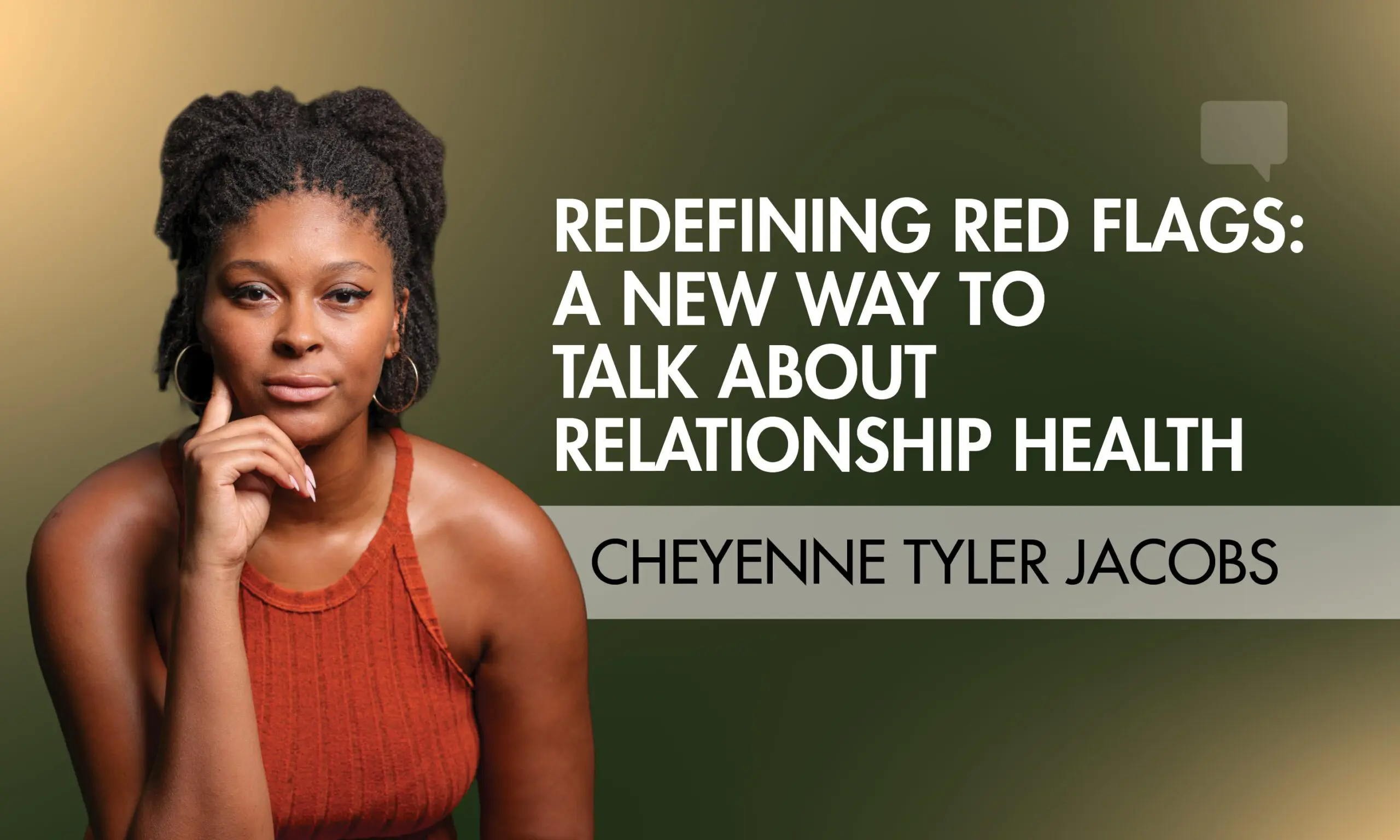
Redefining Red Flags: A New Way to Talk About Relationship Health
We’ve all seen the red flag memes. They’ve become shorthand for toxic traits and harmful behaviors in everything from dating to friendship to workplace culture. And while that awareness is helpful, Cheyenne challenges us to go deeper.
Cheyenne has a more nuanced, empowering, and trauma-informed way to approach the conversation around red flags—one that prioritizes self-awareness, body cues, and values alignment.
Red Flags Aren’t Just About Abuse
Yes, violence and emotional abuse are major red flags. But what if we expanded the definition?
What if a red flag is anything that doesn’t align with your values and impedes your ability to feel safe, seen, and secure?
With that framing, red flags become less about the most extreme moments and more about the subtle, ongoing experiences that chip away at our well-being. The offhand comments. The lack of respect. The moments when we feel pressured to shrink ourselves just to keep a relationship alive.
When Pain Feels Normal
Cheyenne shared a vulnerable story about her own chronic pain and how she ignored it until it became nearly debilitating. Why? Because she had normalized discomfort—something many people do in both physical and emotional pain.
We do the same in relationships. We convince ourselves a “low-grade hurt” is normal, manageable, and maybe even deserved. But Cheyenne’s message is clear: you are not meant to hurt in order to belong.
The Power of Values Checks
To help students move beyond surface-level awareness, Cheyenne offered a practical tool: a values check. Ask yourself:
- What are my core values?
- Where did they come from?
- How do I want to feel in relationships?
If honesty is your value, but you’re constantly second-guessing someone’s words, that’s a misalignment. If you value joy, but you’re always walking on eggshells, that’s a red flag—regardless of whether abuse is present.
Your Body Always Knows
In moments of safety, our bodies feel relaxed, warm, at ease. When something is off, we might feel tightness, nausea, anxiety, or exhaustion. Cheyenne calls this a “body scan,” and encourages students to trust those cues.
You don’t need proof to honor your discomfort. If your body is saying something is wrong, listen.
Build Your Orbit
Your life is a solar system. You are the sun. Others are the planets. And you have the authority to promote or demote people based on how they treat you and whether they align with your values.
It’s not about canceling people—it’s about curating a life where you feel emotionally safe.
What This Means for Campuses
For educators, prevention professionals, and student leaders:
- Go beyond the “don’t do this” red flag lists.
- Teach students to identify their own thresholds and values.
- Create spaces to talk about micro-boundaries, not just crisis moments.
- Encourage emotional literacy—students who know what safety feels like are more equipped to advocate for it.
Final Thought:
“You are deserving of a relationship that does not hurt you.”
Whether it’s a friendship, partnership, family dynamic, or community space—safety is the standard. Let’s empower students to recognize red flags not only in others, but within themselves—by building from their values outward.